⭐ Why they are the shape they are
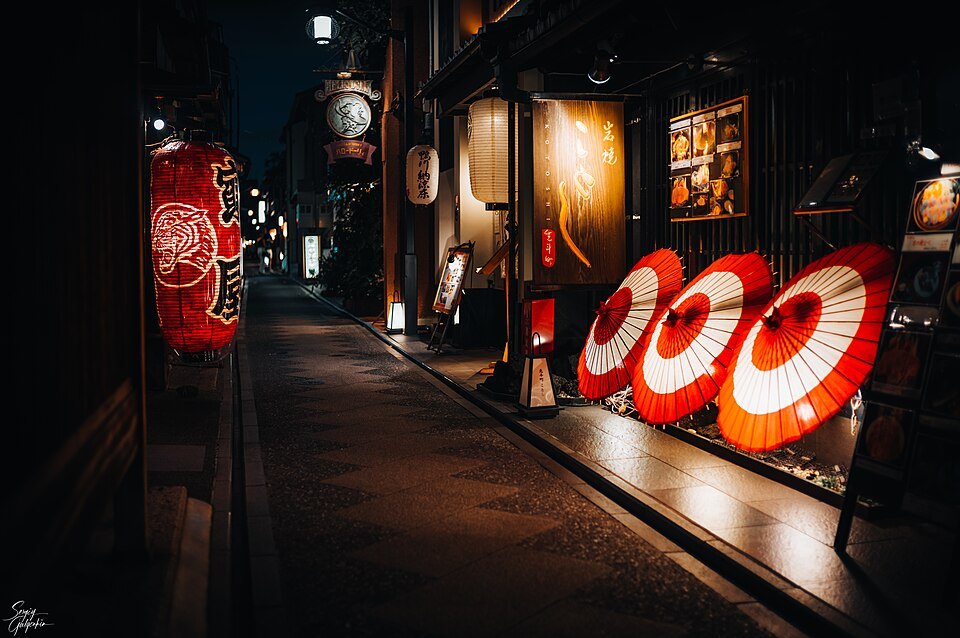
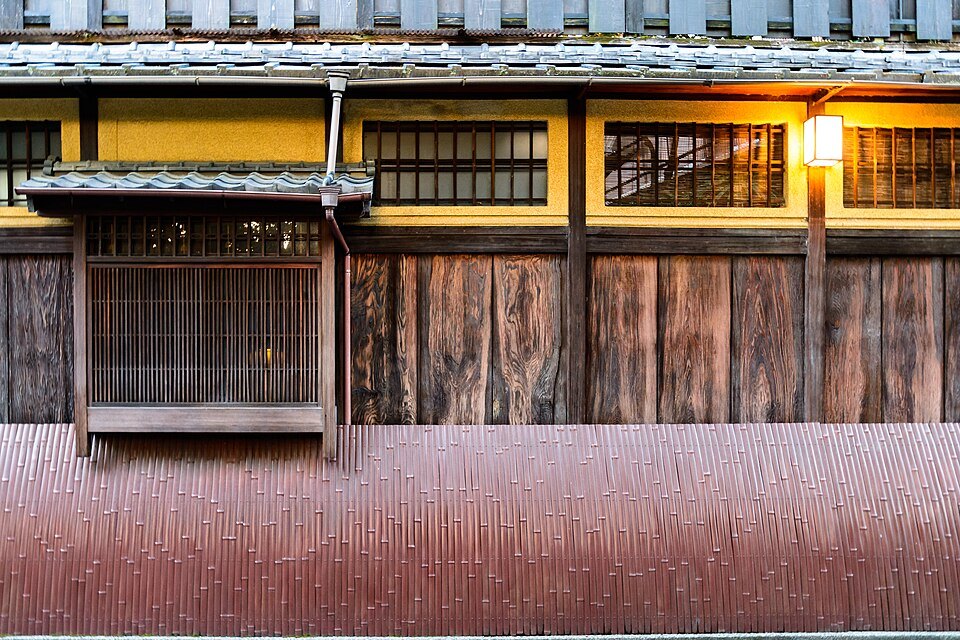
The machiya is the merchant townhouse of the old city: two low storeys, dark timber, a tiled roof, and a frontage of vertical slats. They are what makes a Kyoto street look like a Kyoto street rather than an ordinary Japanese one.
They are known as unagi no nedoko — eel beds — because they are extremely narrow at the street and run a very long way back. Frontage was taxed, so the sensible thing was to buy as little of it as possible and build backwards.
⭐ The lattice tells you the trade
The slatted screen across the front is the kōshi, and it is not just decoration. It is angled and spaced so that from the street you can barely see in, while from inside you see out clearly — privacy in one direction and daylight in the other.
The spacing varied by trade, so a Kyoto street once read as a directory: heavier, more widely spaced slats where a rice merchant needed to move sacks; fine close ones on a sake shop; a different pattern again on a weaver's. Look along a preserved street and you can still see the grammar changing house by house.
Inside, without going in
Behind the lattice runs the tōriniwa — a narrow earth-floored passage going the whole depth of the building, with the rooms opening off one side of it. It carried the kitchen, the smoke and the traffic, so the living rooms never had to be walked through.
Punched through the roof over it is the tsuboniwa, a courtyard garden a few paces square, which lights and ventilates the middle of a house too deep to have windows. ⭐ That tiny garden is the whole design solved in one move.
A noren — the split fabric curtain — hangs in the doorway when the business is open and comes down when it is not, which is the oldest opening-hours sign in the city.
Where to see them
The protected streets are the place: Sannenzaka and Ninenzaka below Kiyomizu-dera, Shirakawa and Hanamikōji in Gion, and the alley of Pontochō.
⚠️ Machiya are being lost steadily — they are expensive to maintain and the plots are valuable — and a good number of the survivors have become cafés, shops and small hotels. That conversion is largely what is keeping them standing.