What it is
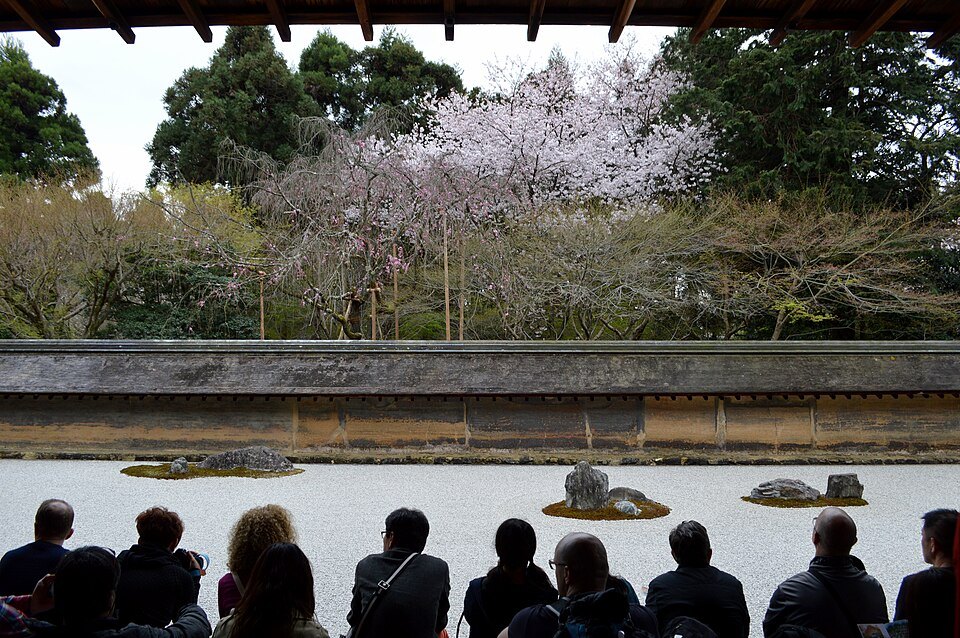
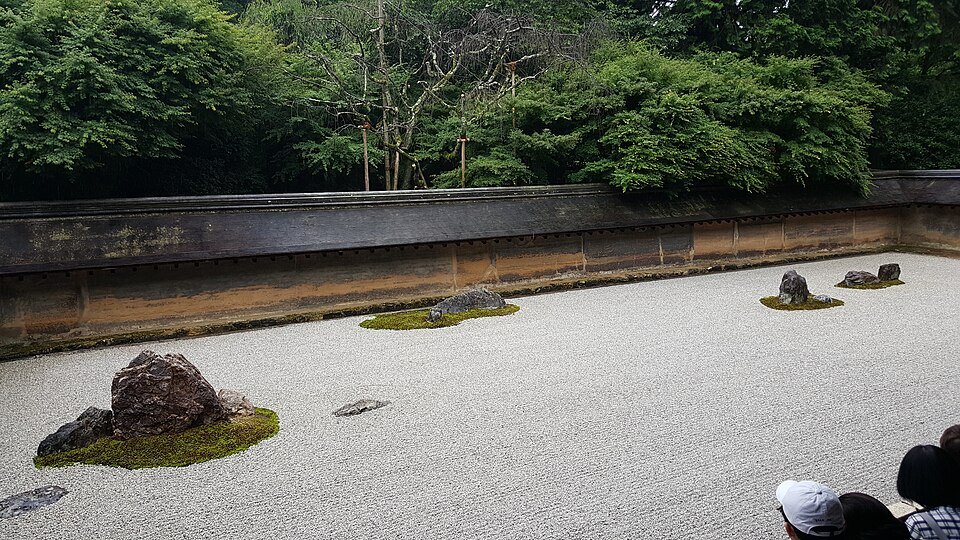
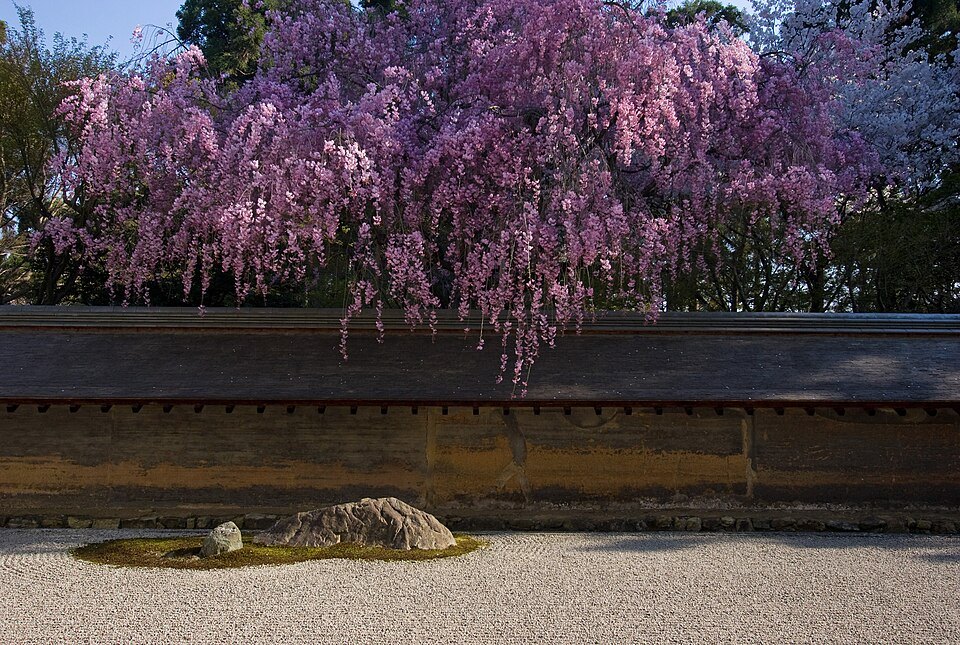
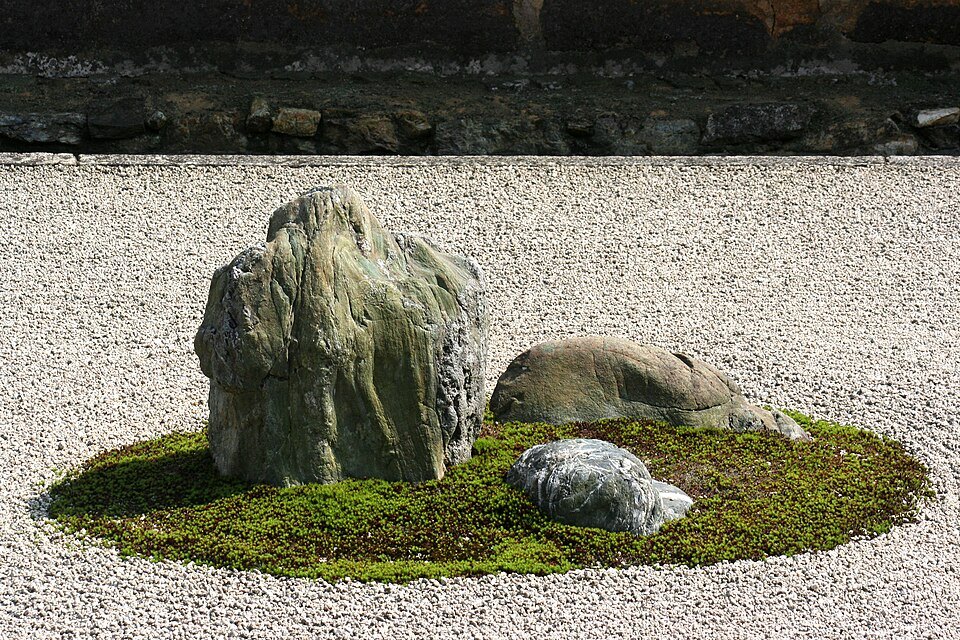
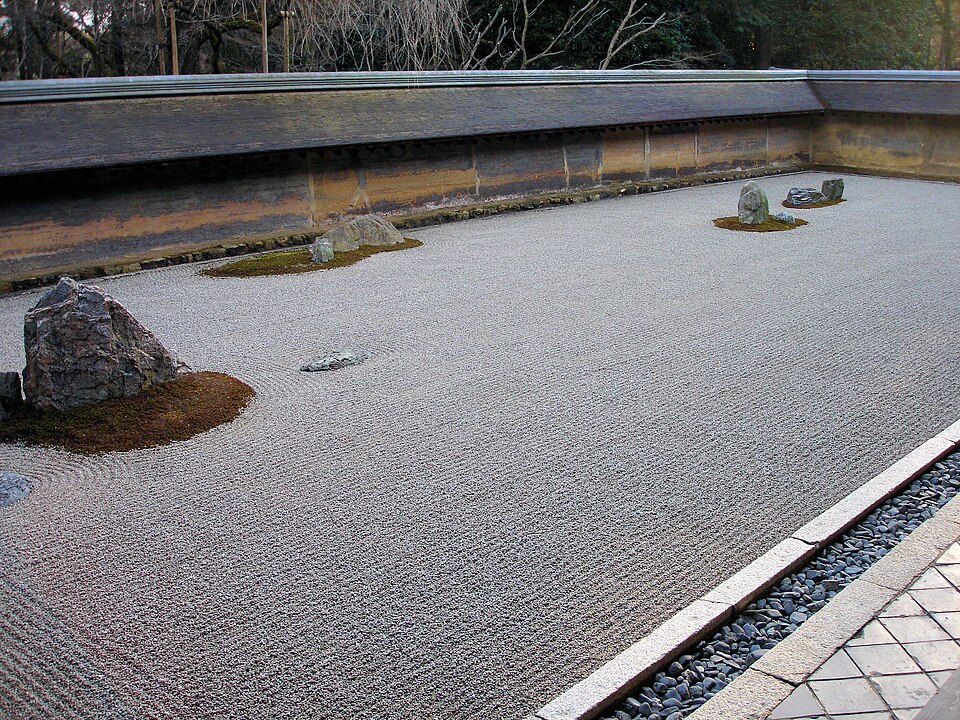
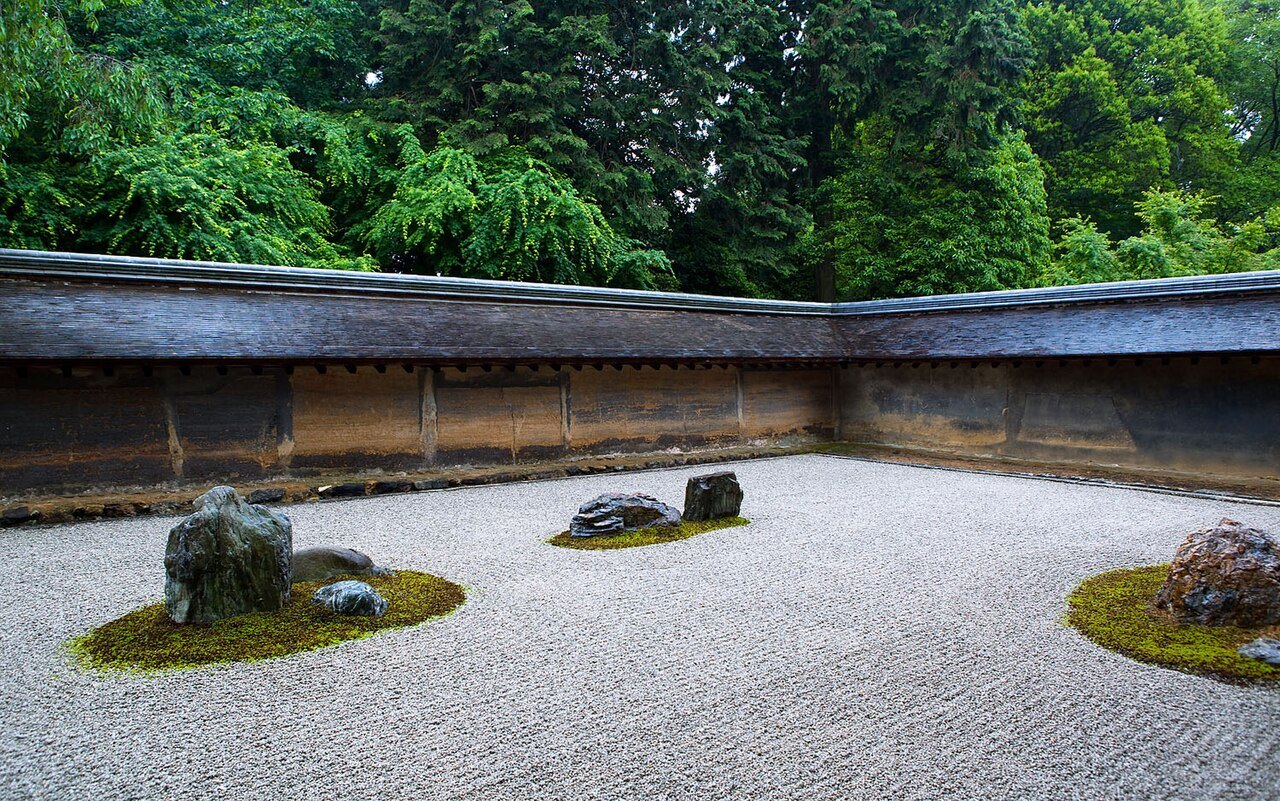
A rectangle of raked white gravel about the size of a tennis court, enclosed by a low earthen wall, holding fifteen stones in five groups with moss at their feet. There is no water, no planting inside it and no path into it. It is karesansui — dry landscape.
The temple around it was founded in 1450 by Hosokawa Katsumoto.
The fourteen
⭐ From any single position on the veranda, only fourteen of the fifteen stones are visible. One is always hidden behind another. Whether that is deliberate is argued over and cannot be settled.
⚠️ Nor can anything else about it. Who designed it, exactly when, and what — if anything — it depicts are all unknown. Islands in a sea, a tiger carrying cubs across a river, and nothing at all have each been proposed.
How to look at it
Sit down on the boards and stay put for longer than feels reasonable. It is not a garden that rewards a circuit and a photograph, and standing at the back with a camera is the one approach guaranteed to get nothing from it.
The wall matters as much as the stones — it is stained and streaked with age, and the trees beyond it change through the year while the rectangle in front does not.